4th Workshop on Automated Spatial and Temporal Anomaly Detection (ASTAD)
Overview
The 4th Workshop on Automated Spatial and Temporal Anomaly Detection (ASTAD) at AAAI-27 brings together researchers and practitioners working on AI-driven anomaly detection across images and video, signals and time series, and graphs. As detection moves from curated benchmarks into deployed systems, anomalies often appear only in the relationship between data streams, such as images, sensor readings, event logs, and maintenance records. ASTAD welcomes work that bridges modalities, disciplines, and method families. This year, the scope extends to detection-specific foundation models, generalist detectors, reasoning-based detection, agentic pipelines that carry detection through to root-cause analysis, and anomaly detection in deployed autonomous agents.
Call for Papers
We invite researchers and practitioners to submit their original research contributions to the 4th Workshop on Automated Spatial and Temporal Anomaly Detection (ASTAD), held as part of AAAI-27. Topics include, but are not limited to:
- Novel architectures and deep generative models for anomaly detection in images, video, graphs, signals, and tabular data, including anomaly synthesis
- Foundation models, vision–language models, and multimodal LLMs for anomaly detection, including generalist detectors
- Agentic anomaly detection and root-cause analysis; anomaly detection in deployed autonomous agents
- Self-supervised, unsupervised, few-shot, zero-shot, and continual anomaly detection under distribution shift
- Explainable and reasoning-based anomaly detection
- Datasets and benchmarking, including zero-shot data leakage and negative results
- Real-time and on-edge anomaly detection
- Applications in healthcare, industry, automotive, robotics, remote sensing, energy, and finance
Submission Requirements
We welcome original research as full papers of up to 8 pages or short and position papers of up to 4 pages, plus additional pages for references only. Submissions must use the official AAAI-27 author kit and will undergo double-blind peer review. We plan to publish accepted papers in proceedings; details will be posted on this page.
All submissions will be handled electronically via OpenReview. Only PDF files are accepted.
Submission Site: OpenReview
Format
ASTAD is a one-day event combining paper presentations, invited talks from leading researchers, and interactive poster sessions, with ample time for Q&A and discussion.
Important Dates
- Paper submission deadline: November 20, 2026
- Author notification: December 2, 2026
- Camera-ready deadline: To be announced
- Workshop Date: February 22–23, 2027
- Workshop Location: Montréal, Canada
Schedule
The workshop schedule will be announced soon.
Speakers
Keynote speakers will be announced soon.
Organizers
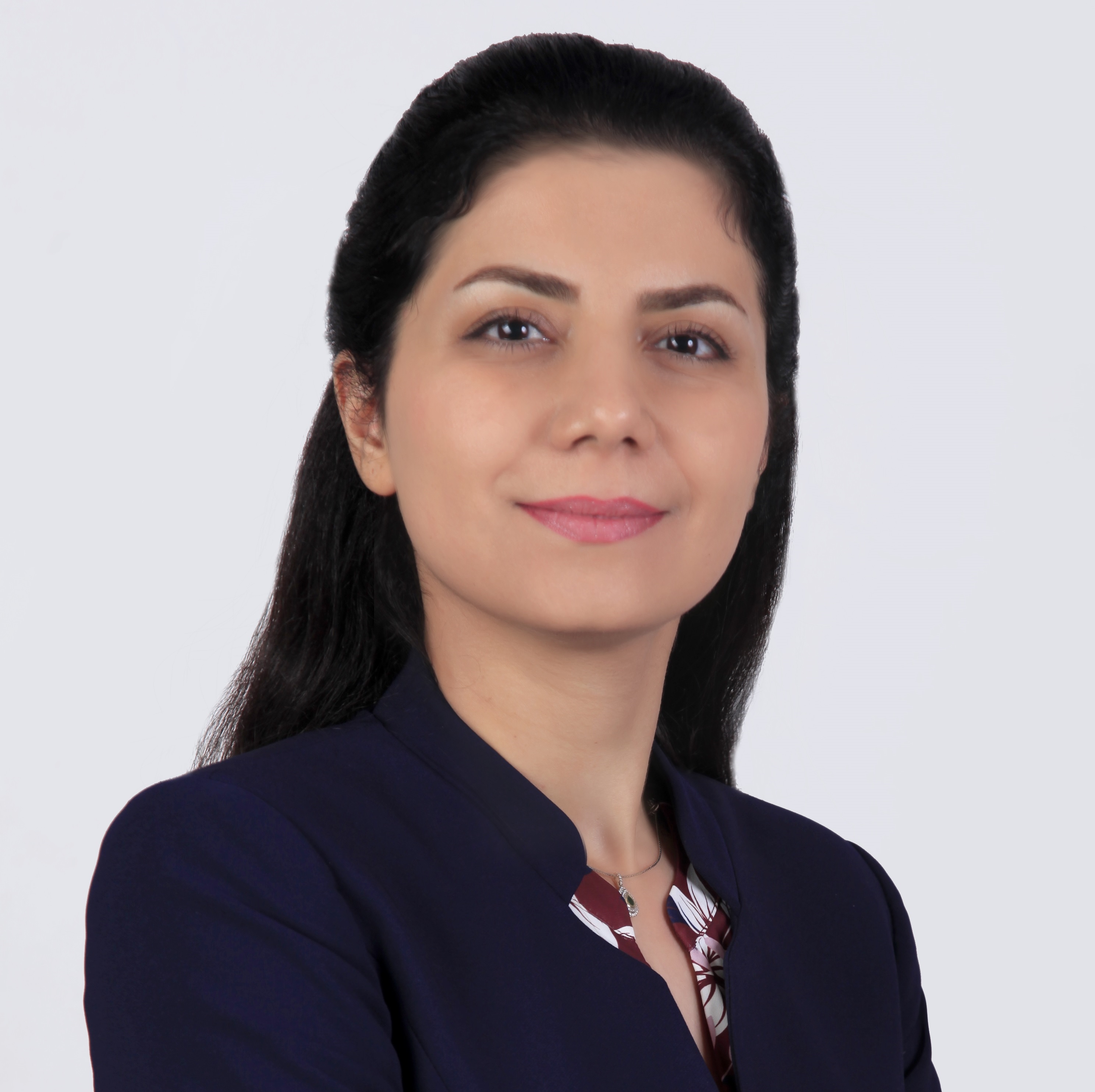
Narges Armanfard (Chair)
Associate Professor - narges.armanfard@mcgill.ca
Narges Armanfard is an Associate Professor of Electrical and Computer Engineering at McGill University and Mila - Quebec AI Institute. She is also affiliated with McGill Centre for Intelligent Machines (CIM), McGill initiative in Computational Medicine (MiCM) and McGill Institute for Aerospace Engineering (MIAE). Dr. Armanfard is the founder and principal investigator of the iSMART Lab with the mission to pioneer advanced algorithms in artificial intelligence, with expertise in computer vision, time series analysis, tabular data, large language models, and visual language models.



Thi Kieu Khanh Ho
AI Researcher (Postdoctoral; Lab member since 2021) - thi.k.ho@mail.mcgill.ca
Khanh received her PhD degree in AI at McGill University and her Master’s degree at Gwangju Institute of Science and Technology (GIST), South Korea. She was a researcher at Seoul National University Hospital (SNUH), South Korea, before moving to Montreal for her PhD. She has received the prestigious McGill Engineering Doctoral Award (MEDA), the GREAT Award, and the highly prestigious Vanier Scholarship and Chwang Seto Award. Her research focuses on time-series data analysis using generative models and graphs.
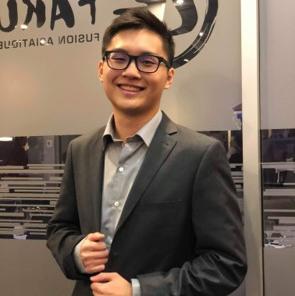
Thomas Lai
AI Researcher (PhD; Lab member since 2023) - thomas.lai@mail.mcgill.ca
Thomas received his Bachelor of Engineering (B.Eng.) from McGill University. He joined the iSMART Lab in the summer of 2023 and subsequently pursued an MSc, focusing on open-set anomaly detection. A year after starting his Master’s at the iSMART Lab, Thomas fast-tracked into a PhD. He is a recipient of the MEUSMA and FRQ awards. His research is on open-set anomaly detection leveraging LLM models.